News

  • Wheelchair Buying Guide - Everything You Need to Know
    In the United States, the number of people using wheelchairs alone has reached millions. So, how can you find the most suitable wheelchair for yourself among the many choices? This article will provide you with a detailed buying guide to help you make an informed decision.
    More
  • What is Parkinson's Disease? What Medical Assistive Devices Do they Need?
    Parkinson's disease is a chronic, progressive neurological disease. In this article, we will explore in detail the definition of Parkinson's disease, its causes, risk factors, symptoms, disease progression, and the medical assistive devices that patients may need.
    More
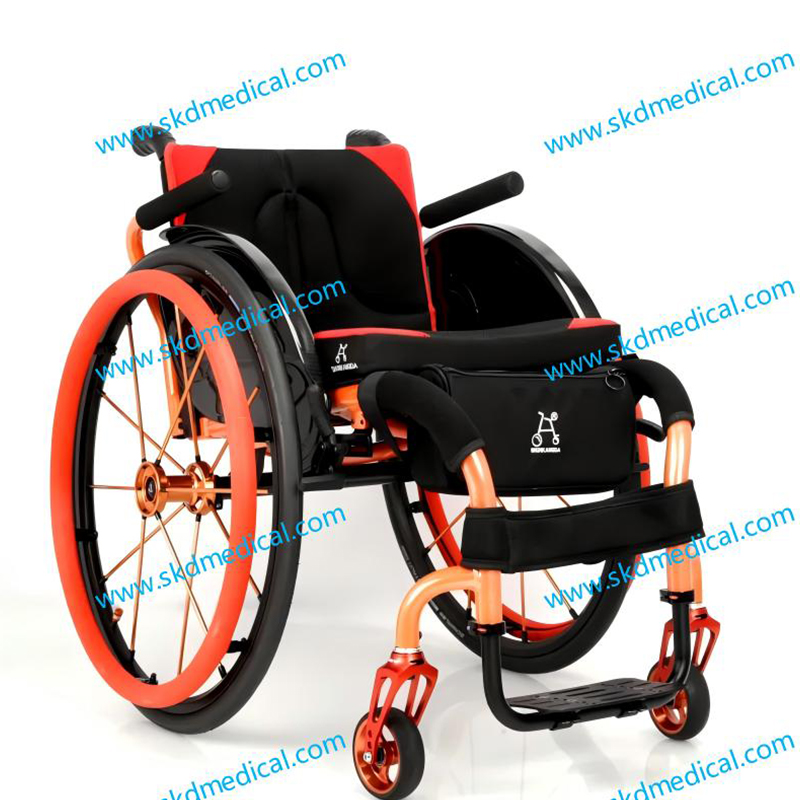

  • Is a manual wheelchair difficult to use?
    The push of a manual wheelchair relies entirely on the user's hand strength, and the wheelchair is moved forward or backward by pushing the manual ring on the outside of the rear wheel. This may be a big challenge for those with weak arm strength, especially when they need to push the wheelchair for a long time, and they are prone to fatigue.
    More
  • What is the difference between a transport chair and a wheelchair?
    Transport chairs are lighter than wheelchairs and are designed to be easier for caregivers to push, carry and store. Because transport chairs use smaller wheels and lightweight materials, they usually weigh much less than wheelchairs, and most models can be easily folded and put into a car trunk or locker.
    More
  • Will the legs of people who sit in manual or electric wheelchairs become stiff?
    There are some common physical changes among people who rely on wheelchairs for a long time. The first is muscle atrophy, especially the muscles in the legs. Due to long-term lack of activity and exercise, the leg muscles of wheelchair users may gradually lose strength and elasticity, leading to muscle atrophy.
    More
  • How long does it take to get a power wheelchair through Medicare?
    The total time to obtain a power wheelchair through Medicare can be roughly divided into the following stages: ● Initial evaluation and physician diagnosis: 2 to 4 weeks ● Select the right supplier: 1 to 2 weeks ● Submit application and wait for approval: 4 to 8 weeks ● Post-approval steps: 2 to 4 weeks
    More
  • What are the best assistive devices for weak legs?
    The best assistive devices for weak legs are: ● walking frame (fixed/wheeled walking frame) ● crutches (single-legged/four-legged crutches) ● Rollator walker (Rollator walker with wheels) ● Wheelchair (manual/electric wheelchair)
    More
  • Why can't my electric wheelchair be charged?
    The top 5 reasons why electric wheelchairs cannot be charged: 1. Battery problems (battery aging, poor battery connection, battery damage) 2. Charger problems (charger failure, charger mismatch) 3. Charging interface problems 4. Line problems 5. Environmental factors
    More
  • What is the weight limit of an electric wheelchair?
    lightweight electric wheelchairs (generally between 100-120 kg), standard electric wheelchairs (generally between 120-150 kg), heavy electric wheelchairs (generally between 150-200 kg or even higher), sports electric wheelchairs (generally between 120-150 kg).
    More
  • Should I leave my power wheelchair plugged in at all times?
    Avoid plugging it in for long periods of time. Although modern battery management systems can prevent overcharging, keeping it plugged in for a long time may still have adverse effects on the battery. It is recommended to unplug the charger as soon as possible after the battery is fully charged.
    More

Get the latest price? We will reply as soon as possible (within 12 hours)

top