Wheelless walkers are usually suitable for people who have limited mobility but still have a certain amount of upper limb strength and independent mobility.
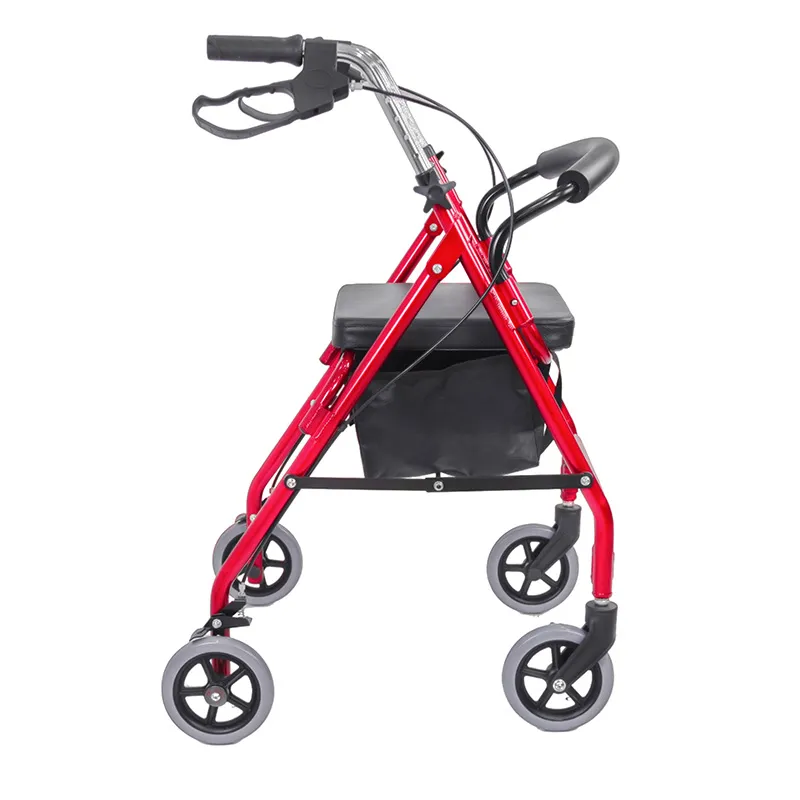
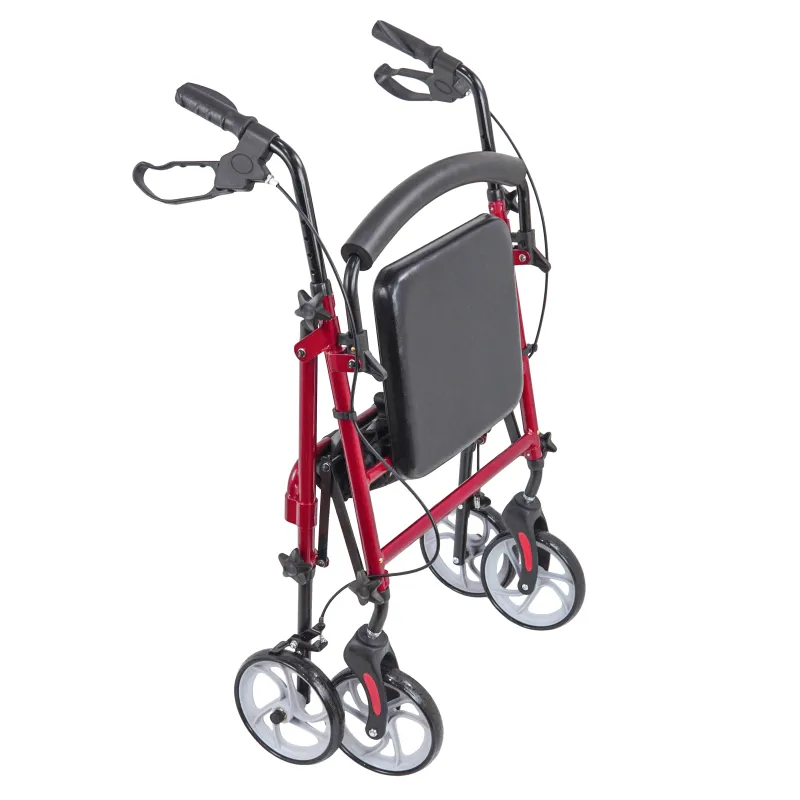
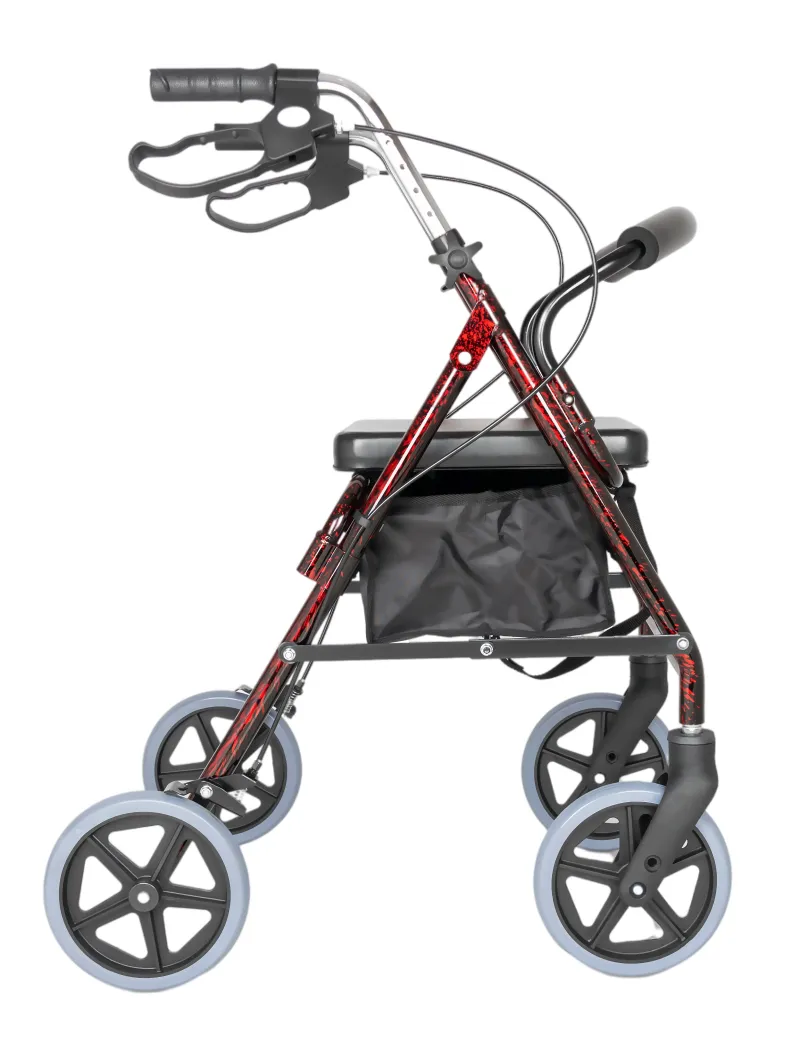
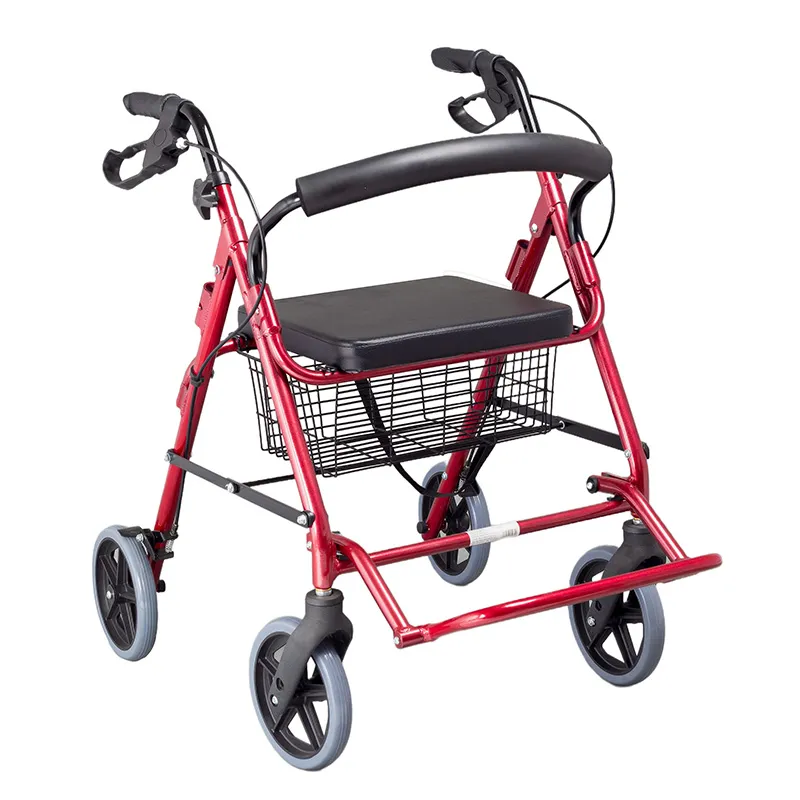
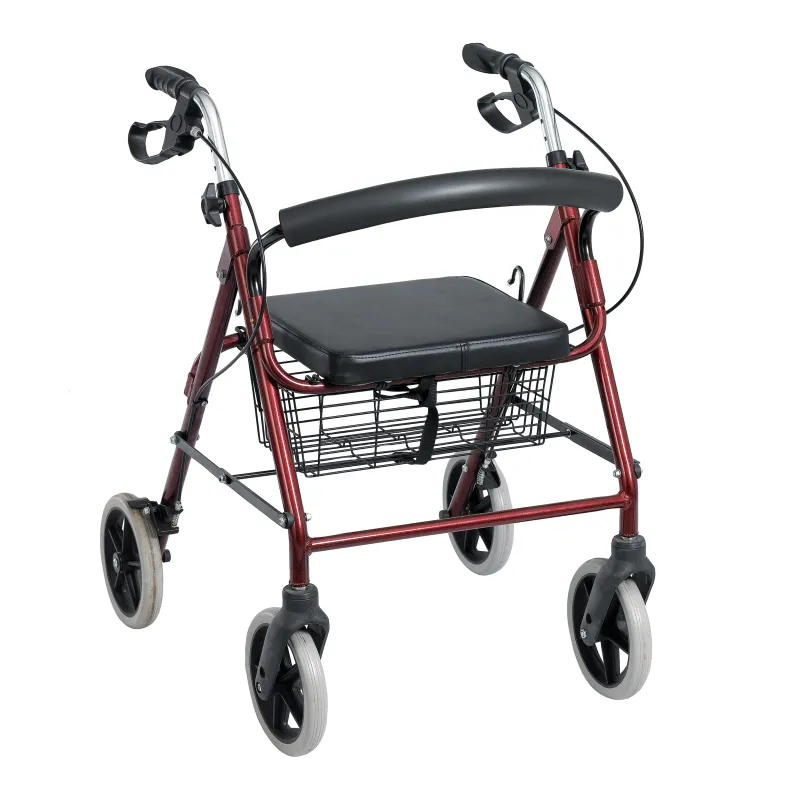
Four-wheeled rollators are suitable for users whose walking ability has decreased but who can still move independently. Compared with wheelless walkers, four-wheeled rollators are more flexible and can meet the various needs of users.
Although the design with wheels increases flexibility, it also brings the potential risk of slipping. If the user uses the rollator walker on a downhill or slippery ground, the wheels may slide too fast and cause loss of control.
The main uses of rollator walker: improve walking stability, enhance autonomous mobility, reduce body burden, and promote rehabilitation training.
Applicable age groups of rollator walker: children, adults, and the elderly.
The advantages of the rollator walker are:
1. Provide support and stability
2. Enhance independence
3. Promote rehabilitation
4. Versatile use
5. Easy to carry and store
Disadvantages of the rollator walker:
1. Difficulty in adaptation
2. Portability issues
3. Terrain restrictions...
Generally speaking, a four-wheeled rollator walker is best for balance. The four-wheeled rollator walker provides a wider support area, making users more stable when walking. In addition, the four wheels make turning more flexible and moving more convenient.